Verify New Home Warranties: 1-2-10 Rules Coastal Buyers Must Check

A new home warranty is the builder's written promise to fix defects in workmanship, systems, and structure for a set period after closing, typically following a 1-2-10 structure: one year for workmanship, two years for major systems, ten years for structural defects. It won't cover your dishwasher, minor drywall cracks, or damage from skipped maintenance. Understanding that split is what separates a smooth claim from a denied one.
Builder Warranty vs. Home Warranty: Why the Difference Matters
A builder warranty and a home warranty sound alike, but they come from different sources and cover different problems. A builder warranty is the construction company's contractual guarantee that your foundation, framing, roofing, and major systems were built to code and will perform correctly. It's tied to the sale, usually included at no extra cost, and often backed by a third-party insurer or a state program.
A home warranty, sometimes called a service contract, is something else entirely. You (or a seller) pay for it separately, and it covers wear and tear on appliances and systems, not construction defects. The FTC draws a clear line here: builder warranties address how the home was built, while service contracts address how appliances hold up over time.
Who actually stands behind the promise varies:
- Builder-funded warranties, backed by the company's own resources or a surety bond.
- Third-party programs, like insurance-backed structural coverage sold through national providers.
- State-administered plans, which set their own rules on timelines and claims.
Buyers using FHA or VA financing sometimes encounter a wrinkle here. HUD rules can require builders to carry third-party warranty coverage as a condition of loan approval, which gives those buyers an extra layer of protection that conventional buyers might not automatically get.

Trusted by thousands of coastal residents, boaters, investors, and future homeowners across the Carolinas.
What Does the 1-2-10 Warranty Timeline Actually Cover?
The 1-2-10 framework is the closest thing the industry has to a universal standard, and it breaks coverage into three distinct clocks that start ticking at closing.
- Year 1 covers workmanship and finish items: drywall defects, trim, paint, doors that don't close right, and flooring installation errors.
- Years 1 and 2 extend to distribution systems, meaning electrical wiring, plumbing lines, and HVAC ductwork that fails due to installation problems rather than normal use.
- Years 3 through 10 narrow to major structural defects, covering load-bearing components like foundations, beams, and roof framing that could threaten the home's structural integrity.
Here's the catch: these windows aren't identical across every builder or provider. Some third-party programs extend workmanship coverage slightly, others define "structural defect" more narrowly than you'd expect. Builder warranties generally limit coverage to specific components like windows, HVAC, plumbing, and electrical systems, but the exact performance standards, the technical benchmarks used to decide whether something actually qualifies as defective, differ from one warranty document to the next. Read the fine print before you assume your situation matches the textbook version of 1-2-10.
What Do New Home Warranties Typically Exclude?
Appliances top the exclusion list almost universally. Your refrigerator, oven, and washer/dryer fall under manufacturer warranties, not the builder's coverage, so if your dishwasher stops working in month four, you're calling the manufacturer, not the builder.
Other common exclusions include:
- Minor cosmetic issues, like hairline drywall cracks or small nail pops that fall within accepted performance standards.
- Damage caused by homeowner neglect, unauthorized modifications, or failure to perform routine maintenance.
- Out-of-pocket costs tied to a repair, such as temporary housing if a major defect forces you out during construction fixes.
That last point trips people up. Most new home warranties won't reimburse expenses like moving costs during repairs, even when the underlying defect is fully covered. The warranty fixes the problem; it doesn't compensate you for the disruption. Reading the exclusion language closely, and understanding exactly what "performance standard" means in your specific document, is the difference between a claim that gets approved and one that gets denied on a technicality.
Who Backs Your Warranty, and Does It Transfer If You Sell?
Not all warranties carry equal financial weight, and that matters more than most buyers realize. A builder-funded warranty is only as strong as the builder's ability to pay for repairs years down the road. If the company goes out of business, that promise can evaporate.
Insurance-backed structural warranties solve that problem differently. Providers like 2-10 Home Buyers Warranty enroll builders in a 1-2-10 program where the structural portion is backed by an insurance policy, not just the builder's balance sheet. That means the coverage survives even if the builder disappears. StrucSure operates on a similar model, insuring the structural tier while builders handle workmanship claims directly.
Some states run their own programs instead. New Jersey's Division of Consumer Affairs administers a New Home Warranty Program with its own timelines and claims procedures, which can differ meaningfully from a private insurance-backed plan.
Transferability is the underrated detail here. Most insurance-backed structural warranties transfer to the next owner if you sell within the coverage window, which can be a genuine selling point. A builder-only warranty may or may not transfer, depending on the fine print, so check before you assume it adds resale value.
How to File a Warranty Claim (and Protect Yourself)
Filing a claim isn't complicated, but skipping a step can cost you the whole repair. Follow this order:
- Document the defect immediately. Take photos, note the date you noticed it, and write a clear description.
- Check your warranty document for the reporting window. Many require written notice within a specific number of days.
- Submit your claim in writing, not just a phone call, and keep a copy for your records.
- Track the builder's response time. Most warranties specify how quickly they must respond and schedule an inspection.
- Escalate if unresolved. Options typically include mediation, arbitration, or, in some cases, small claims court.
Pro Tip: Send your claim by certified mail or another method that creates a delivery record. If a dispute ever reaches arbitration, having proof the builder received your notice on time can make or break your case.
The FTC recommends putting everything in writing and keeping detailed records throughout the process, and that advice holds up in practice. FHA and VA borrowers with third-party warranty requirements sometimes have additional escalation paths through the warranty provider itself, separate from whatever the builder offers.
What to Ask Your Builder Before You Sign
Before closing, get direct answers to these questions:
- What exactly are the coverage lengths for workmanship, systems, and structural defects?
- Who handles repairs, the builder directly or a third-party provider?
- Is there an arbitration clause, and what does it require of me?
- Are temporary housing costs ever covered during major repairs?
Once you've closed, maintenance becomes your responsibility, and it directly affects coverage. Change HVAC filters on schedule, keep gutters clear, and maintain proper drainage around the foundation. Skipping these can give a builder grounds to deny a claim. Watch for red flags in the warranty document itself: vague performance standards, unusually short reporting windows, or language that shifts the burden of proof heavily onto you.
How to Help Buyers Verify Warranty Coverage
Agents can assist buyers by reviewing warranty documents during final walkthroughs, checking that coverage lengths match contract promises. They flag vague performance language before closing, and push for written confirmation when a builder's warranty terms seem thin compared to industry norms. If a lender requires third-party coverage, they confirm it's actually in place. The new construction market moves fast, and a warranty review shouldn't get rushed alongside inspection contingencies and financing deadlines. If you're comparing a fixer upper against a move-in ready new build, warranty coverage is one more factor that belongs in that decision.
The Advice Most Buyers Get Wrong
Most guidance on new home warranties treats the 1-2-10 structure like a guarantee instead of a framework. It's a starting point, not a promise. Two builders can both claim 1-2-10 coverage while defining "structural defect" in ways that produce very different outcomes when something actually goes wrong.
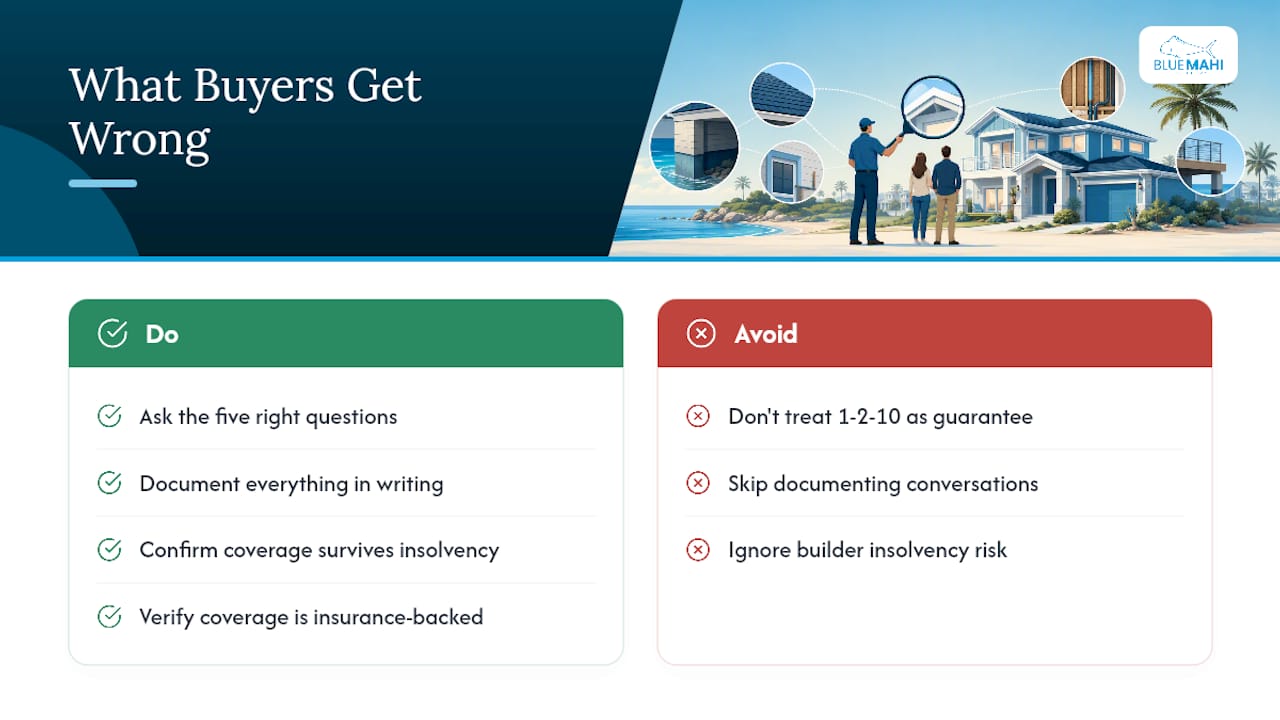
The conventional wisdom tells buyers to "read the warranty," which is technically correct and practically useless. Nobody reads a forty-page warranty booklet cover to cover before closing on a house. What actually matters is asking the right five questions upfront, documenting everything in writing from day one, and knowing whether your structural coverage is insurance-backed or just a builder's word.
If I had to prioritize one thing, it's this: confirm whether your structural warranty survives if the builder goes under. That single detail, more than the length of any coverage period, determines whether your warranty is worth the paper it's printed on. Everything else, the exclusions, the claim process, the maintenance duties, matters, but it's secondary to knowing your coverage won't disappear the moment the company that built your home does.
FAQ
What Is the Best New Home Warranty Company Right Now?
There's no single best provider for every buyer. Insurance-backed programs like 2-10 Home Buyers Warranty and StrucSure both offer structural coverage that survives even if the builder goes out of business, which makes them stronger than a builder-only warranty with no outside financial backing.
What Does Dave Ramsey Say About Home Warranties?
Dave Ramsey has generally advised against paying for optional home warranty service contracts, arguing that the money is often better saved in an emergency fund for repairs. That advice targets appliance/system service contracts, not builder warranties on new construction, which come with the home and typically cost buyers nothing extra.
What's a Red Flag on a New Home Warranty?
Vague performance standards, unusually short reporting windows for defects, and language that puts the full burden of proof on the homeowner are all warning signs. If a builder can't clearly explain the arbitration process or refuses to put coverage terms in writing, treat that as a signal to dig deeper before closing.
Are New Home Warranties Ever Worth Having?
Yes. Structural coverage on a new build protects you against the most expensive possible failures, foundation and framing defects, for up to a decade, often at no direct cost to you. The value comes from the structural tier and insurance backing, not from the shorter workmanship period, which mainly catches issues in the first year.
What Does a New Home Warranty Not Cover?
Appliances, minor cosmetic flaws like small drywall cracks, and damage from homeowner neglect or unauthorized repairs typically fall outside coverage. Out-of-pocket costs like temporary housing during major repairs are usually excluded too, even when the underlying defect itself is covered.
Fore more information and latest updates you can also visit our facebook page:


Comments
Post a Comment